Buy xxlsize.eu ?
We are moving the project
xxlsize.eu .
Are you interested in purchasing the domain
xxlsize.eu ?
domain@kv-gmbh.de · 0541-91531010
Buy xxlsize.eu ?
Is general relativity compatible with quantum mechanics?
General relativity and quantum mechanics are currently not fully compatible with each other. General relativity describes the force of gravity on a large scale, while quantum mechanics deals with the behavior of particles on a very small scale. Efforts to unify these two theories into a single framework, known as quantum gravity, have not yet been successful. Many physicists believe that a successful theory of quantum gravity will be needed to fully understand the behavior of the universe at all scales. **
What is the general theory of relativity?
The general theory of relativity, proposed by Albert Einstein in 1915, is a fundamental theory in physics that describes the force of gravity as a curvature of spacetime caused by the presence of mass and energy. According to this theory, massive objects like planets and stars warp the fabric of spacetime, causing other objects to move along curved paths. General relativity has been confirmed through numerous experimental tests and is the basis for our current understanding of gravity and the structure of the universe. **
Similar search terms for General relativity
Top-Angebote
Products related to General relativity:
-
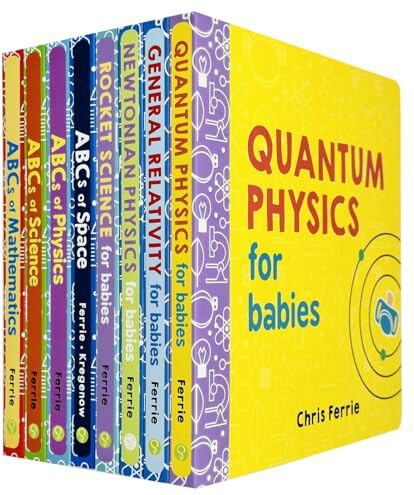
Sourcebooks Explore ltd Baby University Collection 8 Books Set By Chris Ferrie (Quantum Physics, General Relativity, Newtonian Physics, Rocket Science, ABCs of Space, ABCs ofBaby University Collection 8 Books Set By Chris Ferrie (Quantum Physics, General Relativity, Newtonian Physics, Rocket Science, ABCs of Space, ABCs of Physics, ABCs of Science, ABCs of Mathematics)63,92 £*Shipping: 0,00 £Secure redirect to the provider
-
What is spacetime curvature in general relativity theory?
In general relativity theory, spacetime curvature refers to the bending or warping of the fabric of spacetime caused by the presence of mass and energy. According to Einstein's theory, massive objects such as stars and planets create a gravitational field that curves the surrounding spacetime, causing other objects to move along curved paths. This curvature of spacetime is what we experience as the force of gravity. The more massive an object, the greater the curvature it creates in spacetime, and the stronger its gravitational pull. This concept of spacetime curvature is fundamental to understanding the behavior of gravity in the universe. **
-
Do general relativity and quantum mechanics work independently of each other?
General relativity and quantum mechanics are two fundamental theories in physics that describe the behavior of the universe at different scales. While both theories have been incredibly successful in explaining a wide range of phenomena, they are not fully compatible with each other. General relativity describes the force of gravity and the behavior of large-scale objects like planets and galaxies, while quantum mechanics describes the behavior of particles at the smallest scales. Efforts to unify these two theories into a single framework, such as quantum gravity, are ongoing, but as of now, they work independently of each other in their respective domains. **
-
What is the principle of energy conservation in general relativity theory?
The principle of energy conservation in general relativity theory states that the total energy of a closed system remains constant over time. This means that energy cannot be created or destroyed, but only transformed from one form to another. In the context of general relativity, this principle is related to the curvature of spacetime and the gravitational interactions between matter and energy. It implies that the gravitational field itself carries energy, and that the total energy of a system includes both the energy associated with matter and the energy associated with the gravitational field. **
-
What are the implications for astronomy from the general theory of relativity?
The general theory of relativity has several implications for astronomy. It predicts the existence of black holes, which are regions of space where the gravitational pull is so strong that nothing, not even light, can escape. This has led to the discovery and study of black holes, which has greatly expanded our understanding of the universe. Additionally, the theory predicts the bending of light around massive objects, known as gravitational lensing, which has been used to study distant galaxies and map the distribution of dark matter in the universe. Overall, the general theory of relativity has revolutionized our understanding of the cosmos and continues to shape our exploration of the universe. **
Is that relativity?
Yes, that is relativity. Relativity is a theory developed by Albert Einstein that describes how the laws of physics are the same for all non-accelerating observers and how time and space are intertwined in a concept known as spacetime. It has been confirmed through numerous experiments and observations and has revolutionized our understanding of the universe. **
How could one derive from the general theory of relativity that the universe cannot be static?
According to the general theory of relativity, gravity is the result of the curvature of spacetime caused by the presence of mass and energy. When Einstein first formulated his theory, the prevailing belief was that the universe was static and unchanging. However, when he applied his equations to the universe as a whole, he found that it could not remain static - it would either be expanding or contracting. This led him to introduce the cosmological constant, which he later abandoned when it was discovered that the universe is indeed expanding. Therefore, the general theory of relativity predicts that the universe cannot be static, but rather is in a state of expansion. **
Top-Angebote
Products related to General relativity:
-
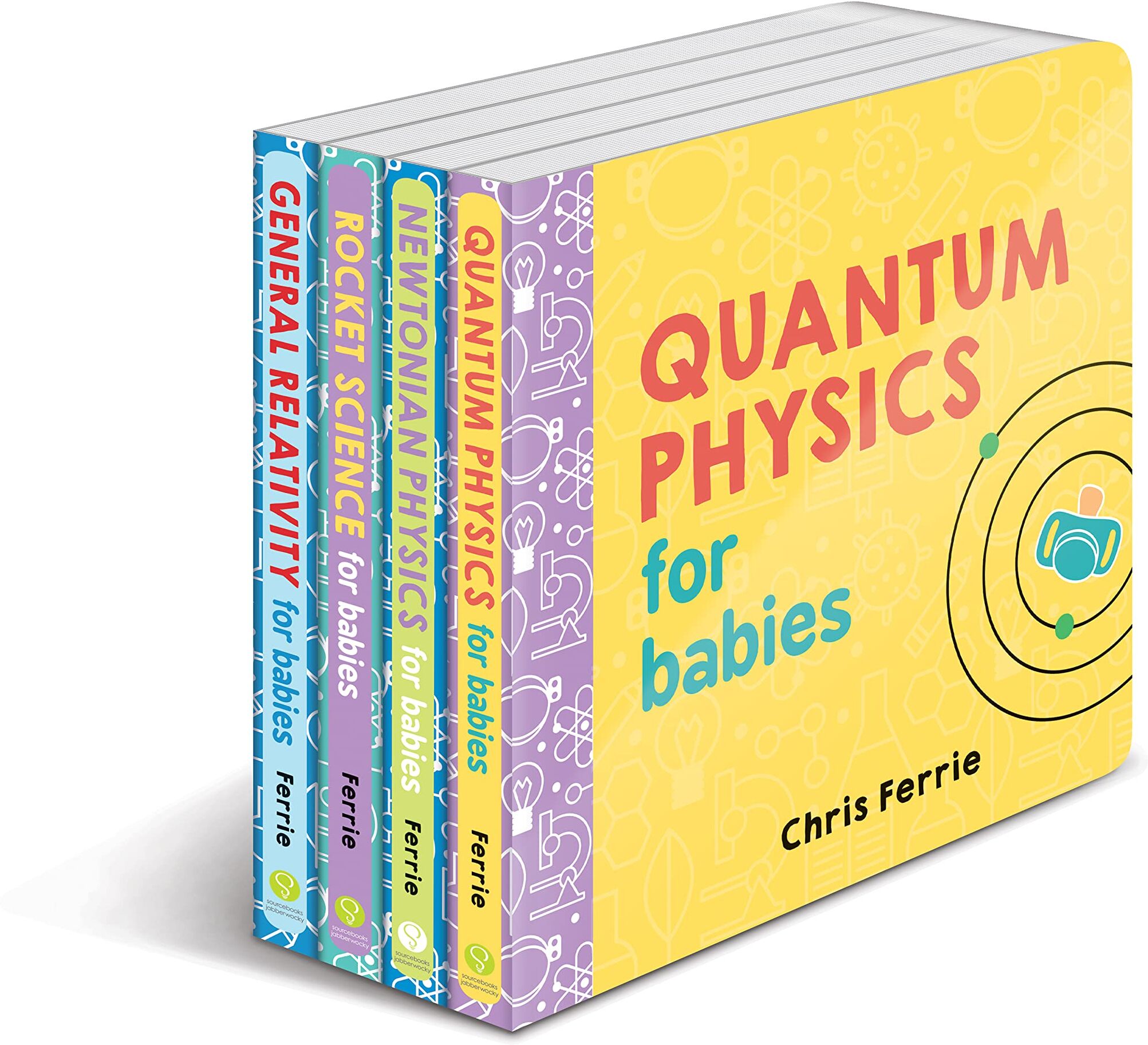
Sourcebooks ltd Baby University Four-Book Set (Quantum Physics, Rocket Science, General Relativity, Newtonian Physics)The perfect gift for your future genius! Written by an expert, the Baby University series features colorful, simple introductions to scientific principles and are beloved by babies―and grownups! Included in this Four-Book Set:• Quantum Physics for Babies• Rocket Science for Babies• General Relativity for Babies• Newtonian Physics for BabiesThis series is the perfect way to introduce basic scientific concepts to even the youngest scientist.12,99 £*Shipping: 2,99 £Secure redirect to the provider
-
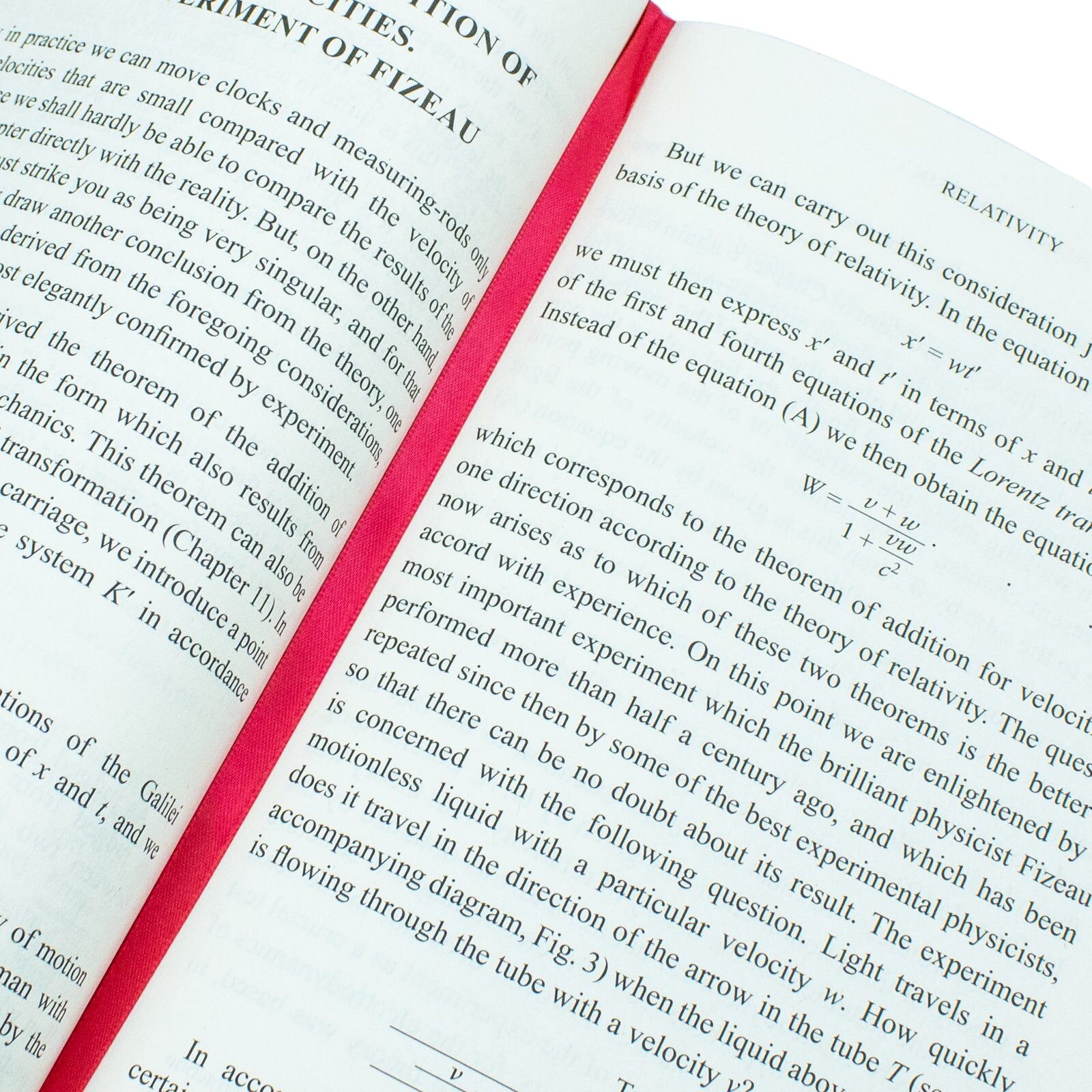
Wilco International LLP Relativity: The Special and General by Albert Einstein (Deluxe Hardback Sprayed Edge Edition)Albert Einstein steps away from complex equations to explain, in simple terms, how space bends, time stretches, and gravity connects everything. In Relativity, he encourages readers to reconsider their understanding of motion and time, providing a unique insight into the mind that transformed modern physics with clarity rather than jargon.4,50 £*Shipping: 1,99 £Secure redirect to the provider
-
Sourcebooks Explore ltd Baby University Collection 8 Books Set By Chris Ferrie (Quantum Physics, General Relativity, Newtonian Physics, Rocket Science, ABCs of Space, ABCs ofBaby University Collection 8 Books Set By Chris Ferrie (Quantum Physics, General Relativity, Newtonian Physics, Rocket Science, ABCs of Space, ABCs of Physics, ABCs of Science, ABCs of Mathematics)63,92 £*Shipping: 0,00 £Secure redirect to the provider
-
Is general relativity compatible with quantum mechanics?
General relativity and quantum mechanics are currently not fully compatible with each other. General relativity describes the force of gravity on a large scale, while quantum mechanics deals with the behavior of particles on a very small scale. Efforts to unify these two theories into a single framework, known as quantum gravity, have not yet been successful. Many physicists believe that a successful theory of quantum gravity will be needed to fully understand the behavior of the universe at all scales. **
-
What is the general theory of relativity?
The general theory of relativity, proposed by Albert Einstein in 1915, is a fundamental theory in physics that describes the force of gravity as a curvature of spacetime caused by the presence of mass and energy. According to this theory, massive objects like planets and stars warp the fabric of spacetime, causing other objects to move along curved paths. General relativity has been confirmed through numerous experimental tests and is the basis for our current understanding of gravity and the structure of the universe. **
-
What is spacetime curvature in general relativity theory?
In general relativity theory, spacetime curvature refers to the bending or warping of the fabric of spacetime caused by the presence of mass and energy. According to Einstein's theory, massive objects such as stars and planets create a gravitational field that curves the surrounding spacetime, causing other objects to move along curved paths. This curvature of spacetime is what we experience as the force of gravity. The more massive an object, the greater the curvature it creates in spacetime, and the stronger its gravitational pull. This concept of spacetime curvature is fundamental to understanding the behavior of gravity in the universe. **
-
Do general relativity and quantum mechanics work independently of each other?
General relativity and quantum mechanics are two fundamental theories in physics that describe the behavior of the universe at different scales. While both theories have been incredibly successful in explaining a wide range of phenomena, they are not fully compatible with each other. General relativity describes the force of gravity and the behavior of large-scale objects like planets and galaxies, while quantum mechanics describes the behavior of particles at the smallest scales. Efforts to unify these two theories into a single framework, such as quantum gravity, are ongoing, but as of now, they work independently of each other in their respective domains. **
Similar search terms for General relativity
-
What is the principle of energy conservation in general relativity theory?
The principle of energy conservation in general relativity theory states that the total energy of a closed system remains constant over time. This means that energy cannot be created or destroyed, but only transformed from one form to another. In the context of general relativity, this principle is related to the curvature of spacetime and the gravitational interactions between matter and energy. It implies that the gravitational field itself carries energy, and that the total energy of a system includes both the energy associated with matter and the energy associated with the gravitational field. **
-
What are the implications for astronomy from the general theory of relativity?
The general theory of relativity has several implications for astronomy. It predicts the existence of black holes, which are regions of space where the gravitational pull is so strong that nothing, not even light, can escape. This has led to the discovery and study of black holes, which has greatly expanded our understanding of the universe. Additionally, the theory predicts the bending of light around massive objects, known as gravitational lensing, which has been used to study distant galaxies and map the distribution of dark matter in the universe. Overall, the general theory of relativity has revolutionized our understanding of the cosmos and continues to shape our exploration of the universe. **
-
Is that relativity?
Yes, that is relativity. Relativity is a theory developed by Albert Einstein that describes how the laws of physics are the same for all non-accelerating observers and how time and space are intertwined in a concept known as spacetime. It has been confirmed through numerous experiments and observations and has revolutionized our understanding of the universe. **
-
How could one derive from the general theory of relativity that the universe cannot be static?
According to the general theory of relativity, gravity is the result of the curvature of spacetime caused by the presence of mass and energy. When Einstein first formulated his theory, the prevailing belief was that the universe was static and unchanging. However, when he applied his equations to the universe as a whole, he found that it could not remain static - it would either be expanding or contracting. This led him to introduce the cosmological constant, which he later abandoned when it was discovered that the universe is indeed expanding. Therefore, the general theory of relativity predicts that the universe cannot be static, but rather is in a state of expansion. **
* All prices are inclusive of VAT and, if applicable, plus shipping costs. The offer information is based on the details provided by the respective shop and is updated through automated processes. Real-time updates do not occur, so deviations can occur in individual cases. ** Note: Parts of this content were created by AI.